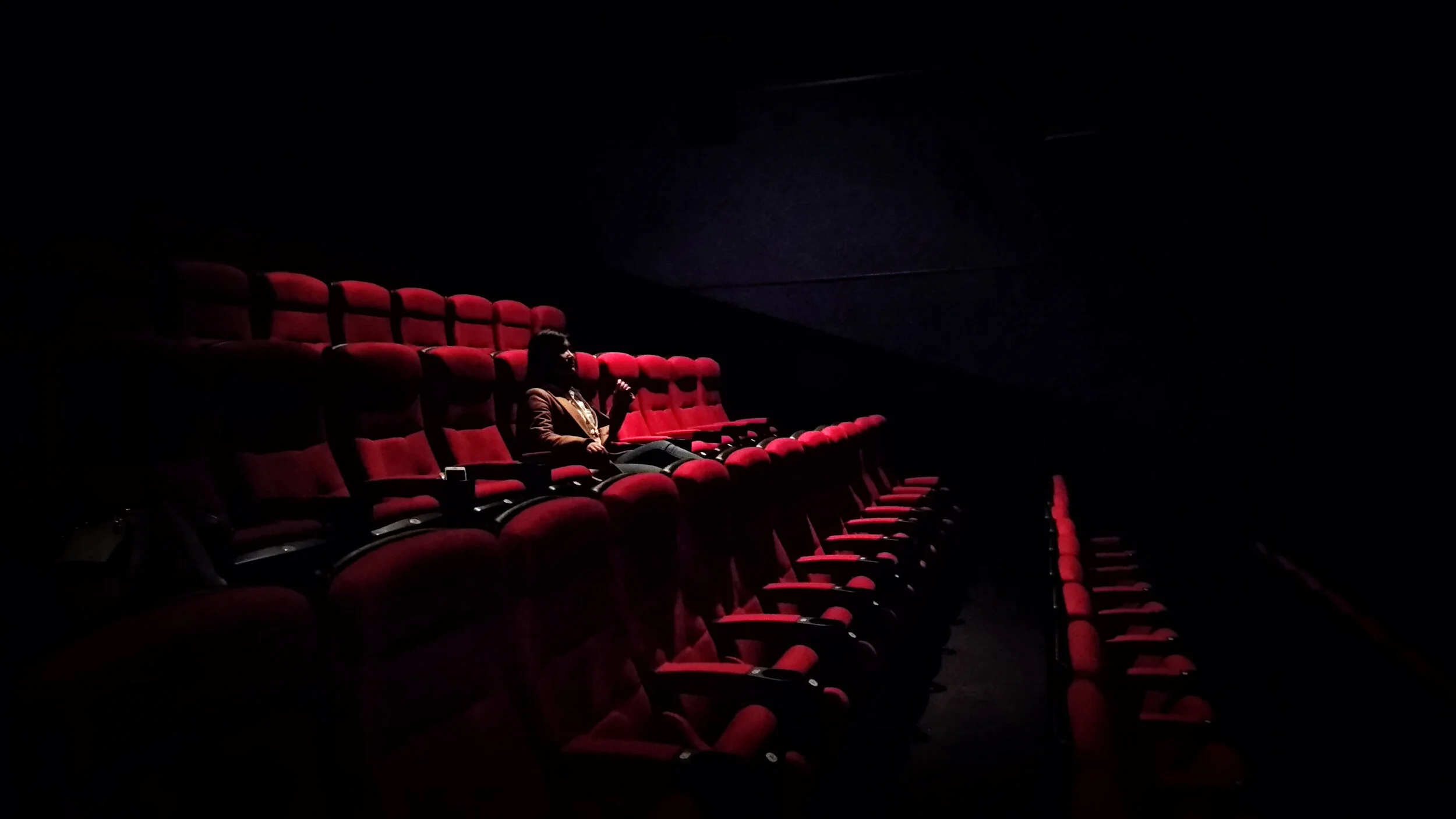
Farewell, My Ruins
Cast of Characters:
Tom – A man in his early 30s; married to Meredith
Meredith – A woman in her early 30s
Setting:
Entire play takes place in one setting, a crumbling house. Era is vaguely 1950s
SCENE ONE
INT. OLD STONE HOUSE, EARLY EVENING
WE OPEN in an old, cobwebbed, crumbling house. Reminiscent of Medieval architecture/remains, exposed stone walls, small window with no pane in centre back. Beyond it is greenery. There is a wooden bench centre stage, slightly off-set to stage left. Further stage left vaguely dissipates into darkness. Stage right ends abruptly with a large wooden door, clearly old, with warped wood, cracks letting in the dim light of the sunset, and an ornate brass knocker. A woman is to stage left, brushing the wall with her fingers, inspecting the shadows.
A man enters stage right, throwing open the door. The door is dislodged from its frame slightly and there is obvious crumbling of the walls, grout, etc. surrounding the door as it bangs against the building. The rubble makes a small heap on the floor.
TOM: That should be the last of it.
MEREDITH: Careful!
TOM: (Roughly fixing the door, returning it to its frame) We’ll worry about ownership, selling, everything else later. I’m just glad to be out of here. Come on, let’s go.
MEREDITH: (Hesitating) I think I want to stay one more night.
TOM: (Looking up after having turned to leave) What? Come on, we can come back tomorrow and make sure we got everything. Car’s still running, let’s go.
MEREDITH: No, Tom, really. I want to stay one more night.
TOM: You’re being ridiculous
Meredith: Am I?
TOM: There’s no beds. No couches. There isn’t even any food.
MEREDITH: I don’t mind. (She suddenly focuses on him for the first time, instead of the house.) I can meet you tomorrow. You go on ahead.
TOM: Meredith you’re not making any sense.
MEREDITH: I’m fine. You don’t need to understand. Please, go back to the house. I need to stay here one more night.
TOM: I don’t…? (Pauses, considers) Meredith, this isn’t about the other night, is it? We can work this out. We can talk.
MEREDITH: This isn’t about anything. It has nothing to do with you.
TOM: You’ll catch cold! You’ll go hungry! I’m not going to come up here tomorrow and collect an ill, starved wife, possibly maimed by wildlife, possibly–
(To stage left, a beam crashes from above. It knocks some stones loose and sets up an array of dust.)
TOM (cont’d): Damn it! This place is falling apart, let’s GO!
MEREDITH: I’ll see you tomorrow, Tom. I’ve told you what I’m doing. You’re going to have to cope with it.
(TOM grunts and throws his arms up, paces briefly, then storms out, swearing. MEREDITH waits to ensure he’s gone, then sighs, collapsing onto the bench. She holds her head in her hands. After a pause, she looks up again and examines the room around her, as if seeing it for the first time. She gets up and goes to the window, reaching her hand out and bringing in a leaf. She sets it on the pane and moves her hands around the framing of the window, feeling all the crevices.)
MEREDITH: I love this old house
FADE TO BLACK.
SCENE TWO
INT. SAME OLD HOUSE, MID-LATE MORNING
HOUSE remains primarily the same, with a few more cracks and splinters in the wood and bricks, a few more piles of rubble on the ground. MEREDITH is asleep on the floor beneath the bench, somewhat covered in dust and debris, but seemingly perfectly content. She is waking up. She lifts herself onto her arms, sitting up, leaning back against the bench now. She looks around; she isn’t smiling, but she’s at peace. The door to stage opens. It isn’t slammed open this time, but is thrown open harshly, with the hand never leaving the handle. TOM enters.
TOM: It’s time to go now, Meredith.
(MEREDITH wavers, still lost in the night prior, half-in and half-out of touch with the house. Then, she begins losing her connection with the house and returning to the conflict with TOM, slowly.)
TOM: Meredith!!
MEREDITH: Not yet.
TOM: You can’t stay here forever. You can’t save this place.
MEREDITH: Why, I don’t intend to.
TOM: Then what is it that you want, Meredith?
MEREDITH: (Obstinately) To stay. Here. Just for a while longer.
TOM: This place won’t even stay standing for a while longer. (He jiggles the door handle, forcefully, and it tears away, illustrating his point. He throws it to the ground and gestures to it, furiously.)
MEREDITH: It doesn’t need to. I don’t intend to force it to stand– I’m fine if it falls. I just want to be… here.
(TOM begins pacing again, holding his face in his hands at intervals, pausing. MEREDITH adjusts herself on the bench, straightening herself out, glancing around the floor, the walls, the structure.)
TOM: You can’t run from me, you know. We’re married. That’s a contract, there’s paperwork. You can’t just give up and run away.
MEREDITH: Who said I was? Actually, quite the contrary. I’m staying entirely put.
TOM: Well, I’m leaving.
MEREDITH: That is entirely your prerogative.
(TOM bangs the wall, damage ensues, it crumbles.)
TOM: Dammit, Meredith!
(MEREDITH smoothes her skirt and looks at him, waiting.)
TOM (cont’d): (Sighing) You can’t solve anything this way, you know.
MEREDITH: What needs to be solved? I’m fine here. Perfectly content.
TOM: Well, you know I’m not content.
MEREDITH: And what am I supposed to do about that?
TOM: You know you’re not content either!
MEREDITH: No, I don’t know that.
TOM: You’re not happy here! You’re just being stubborn! Can you– (He stops, sighs, grabbing his face again.) Can’t we just discuss this in the car?
MEREDITH: What is there to discuss? I’m staying here another night, you’re leaving. (Pause) Maybe I ought to stay a third…
TOM: If you stay here three nights, I’m not coming back for you.
MEREDITH: I wouldn’t expect you to. I’m perfectly capable of walking out that door and making it to town myself – you needn’t do it for me. But I want to stay here, just for a while longer.
(TOM throws his hands up, turning around, resuming his pacing.)
TOM: We still love each other. We can figure this out.
MEREDITH: (Bored, almost mockingly) Figure out what?
TOM: You still love me! I know you do! And, I love you, so please let’s just get in the car.
MEREDITH: (Angry, standing, yelling now) Can you not listen? You love me, you want to go, you can get in the car and leave. I’ve told you what I think, but it doesn’t seem to make a difference now, does it? What would it change if I told you I didn’t love you? Well I don’t love you, and I don’t want to get in the car, and I don’t want to leave. I want to stay right here, and let this house crumble around me, and be here with it as it goes.
(The House heaves, moans. Silence.)
TOM: (Sitting down) You don’t mean that.
(It’s MEREDITH’s turn to throw her hands up and turn around, facing the back wall, pacing)
TOM (cont’d): We were happy once, weren’t we? You were happy, weren’t you?
MEREDITH: There’s nothing I can do to convince you– of this, or otherwise. Fine. I don’t need you to understand, nor do I ask you to. But I do ask you to leave. Now. I’ve made my wishes clear and I intend for you to respect them.
TOM: What are you going to do tomorrow, the day after? Have you eaten? What will you do for food? What happens when this place collapses? You could get injured in your sleep! How would you get help then?
MEREDITH: That is for me to figure out. You’ve made your concerns known, done your due diligence. Good-bye, now. Please.
(TOM sits there a while longer, staring at her, before slowly rising from the bench and making his way to the door. His eyes are fixed on her the whole time, even though he is kicking up rocks and debris in his wake. He pauses at the door, hand on the wood where the knob used to be.)
TOM: Okay. Goodbye, Meredith.
(TOM leaves. MEREDITH heaves a sigh of relief, securing the door behind him and resting on the bench again. She moves her hands up and down it, feeling the wood.)
MEREDITH: (Smiling) Goodbye. (Pause as she looks around.) I’m back. We’re alright now. I’m staying right here.
(Rubble crashes over the window behind her, but she doesn’t turn to look.)
BLACKOUT.
SCENE THREE
INT. SAME OLD HOUSE, EARLY AFTERNOON, A DAY OR TWO LATER
Sounds of some banging. Lights abruptly come up as TOM bursts into the house, stumbling a few steps forward, the door flying open as he has finally gotten it unstuck.
TOM: (Looking back at the door) That thing won’t open much longer. It’s getting all compressed.
(Stops as he looks into the house for the first time and his gaze falls upon the rubble now blocking most of the window, his wife peacefully asleep on top of it, face towards audience. He sighs, stares for a moment, then turns around and leaves, inexpertly yanking the door back onto its hinges and shut behind him.)
TOM (cont’d): (Quietly) Goodbye.
FADE TO BLACK.
SCENE FOUR
INT. SAME OLD HOUSE, LATE AFTERNOON, INDETERMINATE AMOUNT OF TIME LATER
Lights come up on the same basic setting, but in the centre of the room is a large pile of rubble, high and wide. The walls are partially collapsed, letting the audience see behind into the wooded area which could only be seen through the window before. The door has fallen out and lays tilted on its side, propped against some debris. We hear bugs, toads and nocturnal creatures chirping, waking up for night.
A spotlight comes on and points to the base of the pile, where we can see a hand sticking out, and a little further behind, a lone shoe on its side.
There is a noise like a sigh, though it may just be the house settling into its new state as ruins.
Lights down.
SCENE FIVE
INT./EXT. OF RUINS OF HOUSE, EARLY AFTERNOON, SOME TIME LATER
Lights up on the ruins of the house. No full walls remain, daylight from outside lights the stage. The pile of rubble in the centre is compressed now, scattered. There is no door, but a vague arch rises over the place it used to be. TOM approaches, walking through the arch. He is slightly older, perhaps with a beard now, dressed slightly more refined than in previous scenes. He pauses in the archway, and it is clear that returning to this site is not a habit of his. He looks around, then slowly walks to where the window used to be, looking forward over the now ill-defined pile in the middle, where there once was a bench and where once was his wife. He bends down and brushes the greenery peeking through the stones as nature slowly reclaims the place. He spots a flower, picks it, and holds it up.
TOM: A daisy. She always liked daisies.
(He looks at the flower for a while, then turns back to the pile, the quarter walls around him, the debris of a past life he hasn’t looked back on in years.)
TOM (cont’d): Didn’t she?
SLOW FADE TO BLACK
END.